On this page
- What are FHA minimum property standards?
- What won’t pass an FHA inspection? A checklist
- What happens if a home fails FHA minimum property standards?
- What if the seller refuses to make FHA repairs?
- What if the seller is a bank or HUD?
- Can a seller refuse an FHA loan?
- Before you make an offer on an as-is home
- FAQ
- What to do next
The question: A reader asked: the home I want is sold as-is, the seller won’t make repairs, and it doesn’t meet FHA minimum property standards. How can I still get an FHA loan?
The short answer: You can, but only after the safety, soundness and security problems on the FHA appraisal are fixed. Cosmetic flaws can stay. If the seller refuses, you can pay for the repairs yourself with the seller’s written permission, use a repair escrow, or finance the work with an FHA 203(k) loan. If none of that works, your purchase contract decides whether you can walk away and keep your deposit.
What are FHA minimum property standards?
FHA minimum property standards are HUD’s rules that a home must be safe, sound and secure before FHA will insure a loan on it. They are in section II.D of HUD Handbook 4000.1, the FHA Single Family Housing Policy Handbook.
The handbook uses two terms. Minimum Property Requirements (MPR) apply to every FHA-insured home, while Minimum Property Standards (MPS) cover new construction. Most buyers and agents say “FHA minimum property standards” for both, and so does this article.
Who checks: the FHA appraiser
An FHA roster appraiser checks the property during the appraisal. The appraiser must note “every instance where the Property is not safe, sound, and secure,” list the repairs and estimate the cost to cure. However, the lender makes the final call. In HUD’s words, “Regardless of the Appraiser’s suggested repairs, the Mortgagee will determine which repairs are required.”
A home inspection is a separate step, and it is optional. Your lender must give you HUD form HUD-92564-CN, For Your Protection: Get a Home Inspection, at first contact. That form states, “FHA does not perform home inspections.” So an inspector looks deeper than the appraiser does. See why a home inspection is worth the fee.
What won’t pass an FHA inspection? A checklist
Many buyers call the FHA appraisal an “FHA inspection.” These conditions in HUD 4000.1 lead the appraiser to require a repair or further inspection.
Roof, heat, wiring and plumbing
- Roof: leaks, or less than two years of remaining life. The appraiser then requires an inspection by a professional roofer.
- Heat: a permanently installed system that can’t automatically keep living areas at 50°F or warmer. It must also be safe, burn a fuel that’s available locally, and run without someone tending it.
- Electrical: frayed or exposed wires, or a system too small for normal household use.
- Plumbing: poor water pressure or flow, drains that don’t carry waste away, or no hot water.
- Water heater: no temperature and pressure-relief valve with piping to carry off steam or hot water.
- Water and sewer: no safe, steady drinking water supply, or a septic system with visible signs of failure.
- Bathroom and kitchen: each unit needs at least one bathroom with a toilet, sink, and tub or shower, plus a kitchen sink and stove hookup.
Central air conditioning isn’t required, but an installed system must work. If the utilities are off during the visit, the appraisal is “subject to reobservation” after they come back on.
Structure, pests, paint and hazards
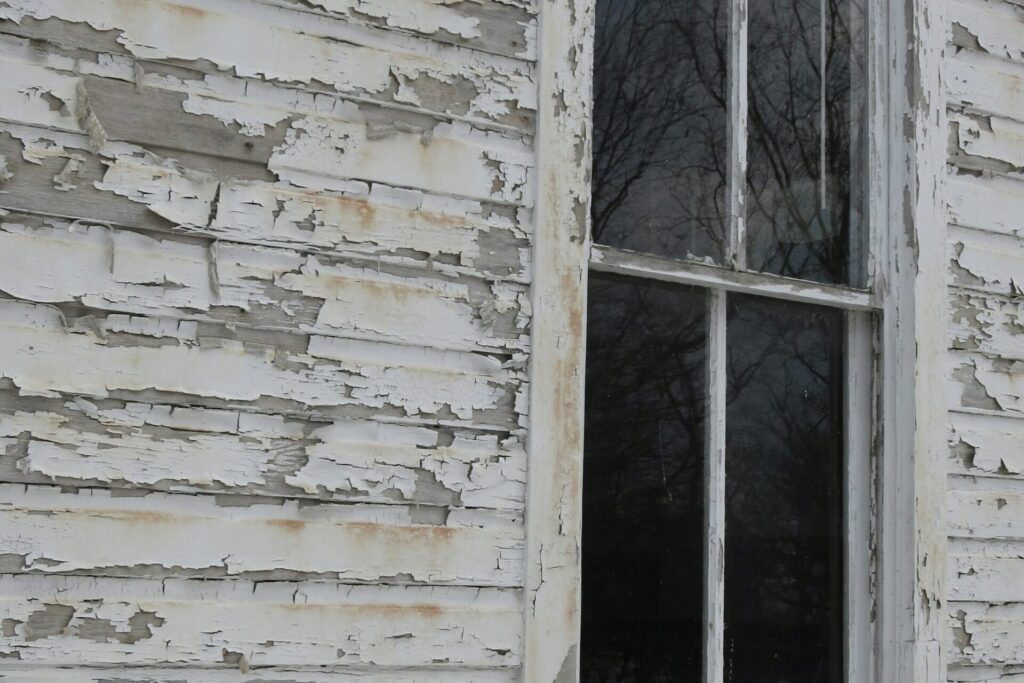
- Lead paint (home built before 1978): any cracking, chipping, peeling or loose paint, inside or out.
- Exterior paint (home built in 1978 or later): paint so worn that it exposes the surface underneath to the weather.
- Structure and foundation: signs of settlement or structural failure, a wet basement, or a sump pump that doesn’t work.
- Attic and crawl space: heavy dampness, poor ventilation or a smell of mold.
- Termites and other wood-destroying insects: any evidence, including a past treatment, triggers a pest inspection.
- Hazards: known environmental hazards, such as mold or toxic chemicals. A home with meth contamination stays ineligible until it is certified safe to live in.
- Power lines: a high-voltage transmission line directly over the house. The line has to be moved.
- Pool: unstable sides or structural damage. The pool must be repaired or filled in.
Cosmetic repairs don’t fail FHA minimum property standards
HUD limits required repairs to those that protect safety, soundness, security, marketability and the occupants’ health. The handbook states, “Cosmetic or minor repairs are not required.” Its examples include:
missing handrails that do not pose a threat to safety, holes in window screens, cracked window glass, defective interior paint surfaces in housing constructed after 1978, minor plumbing leaks that do not cause damage (such as a dripping faucet)
Worn carpet and a dated kitchen are normal wear and tear of the same kind. In addition, the appraiser “should not recommend replacement because of age” when a component still works. So an old furnace that heats the house well can pass.
What happens if a home fails FHA minimum property standards?
The appraiser completes the report “subject to” the repairs, with photos and a cost estimate. For problems beyond the appraiser’s expertise, the report requires an inspection by a roofer, engineer or other pro.
Next, the lender confirms every reported defect is fixed before it approves the property. An FHA appraiser signs a completion report (Fannie Mae Form 1004D), or an approved inspector signs form HUD-92051, Compliance Inspection Report. If a repair isn’t feasible, HUD tells the lender to reject the property.
A lender also can’t shop for a cleaner report. HUD bars a lender from ordering another appraisal to raise the value or to remove required repairs. For value problems, see what to do when your appraisal comes in low.
Does an FHA appraisal stay with the property?
It can. An FHA appraisal is valid for 180 days from its effective date. Under the handbook update that lenders must follow by November 10, 2026, each FHA case number needs its own appraisal. However, a lender may reuse an appraisal from a case number that was canceled and never endorsed. As a result, the next FHA buyer may inherit the same repair list.
What if the seller refuses to make FHA repairs?
A seller who refuses FHA repairs doesn’t end the deal by itself. Here are your options, roughly from simplest to most involved.
1. Ask again, with the repair list in hand
Send the listing agent the appraiser’s repair list and cost estimates. A short, specific list is easier to accept. Also point out that a conventional buyer’s appraiser may flag the same safety items.
2. Pay for the FHA required repairs yourself
HUD lets the buyer pay for required repairs. Better yet, the lender may add the cost to the sales price before it figures your loan amount, as long as:
- the appraiser required the repairs to meet HUD’s standards;
- you pay for them; and
- the sales contract or an addendum names you as the party who pays for and completes them.
The amount added can’t exceed the lowest of these: how far the appraised value tops the price, the appraiser’s estimate, or the contractor’s bid.
Because you don’t own the home yet, get the seller’s written permission first. If the sale falls through, you may lose that money. If you do the work yourself, the lender may count the reasonable value of your labor and materials as “sweat equity” toward your funds. Cleanup and general maintenance don’t count.
Agents sometimes offer to chip in. However, HUD treats agents as interested parties, and an interested party’s repair allowance cuts the price used to size your loan, dollar for dollar. Ask your lender how it will handle an agent’s payment first.
3. Ask about an FHA repair escrow
A repair escrow, also called an escrow holdback, lets you close first and finish the work afterward. HUD 4000.1 allows one “for alterations and repairs that cannot be completed prior to loan closing, provided the housing is habitable and safe for occupancy at the time of loan closing.”
The escrow must cover the full cost, and it can’t pay for your own labor. Afterward, the lender certifies completion on form HUD-92051. Since the home must be safe to live in at closing, serious safety items usually get fixed first. The handbook sets no dollar cap on a standard FHA purchase. Even so, many lenders don’t offer repair escrows, and others set their own limits.
4. Use an FHA 203(k) loan
An FHA 203(k) loan combines the price and the repair costs in one mortgage, and the work happens after closing. In 2026, the Limited 203(k) covers minor, nonstructural repairs, with total rehab costs of up to $75,000 (HUD Mortgagee Letter 2024-13). In contrast, the Standard 203(k) requires at least $5,000 of work, allows structural repairs such as foundation work, and requires a 203(k) consultant.
5. Consider a conventional loan
A conventional loan won’t get you around a serious defect. Fannie Mae requires a home with safety, soundness or structural problems to be appraised “subject to” repairs. A home rated C6, the lowest condition rating, isn’t eligible until repairs bring it to at least C5 (Fannie Mae Selling Guide B4-1.3-06). Still, Fannie Mae uses that broad test instead of HUD’s itemized list. Compare the two in our FHA vs. conventional loan answer.
6. Walk away under your contract
The FHA amendatory clause lets you cancel without losing your earnest money if the appraised value comes in below the price. However, the clause covers only the appraised value. To exit over repairs, you need an inspection, appraisal or financing contingency. Check its deadlines with your agent, and see how a contingent offer works.
What if the seller is a bank or HUD?
Banks selling foreclosed homes, called real estate owned (REO), usually sell as-is. Many won’t make repairs or let a buyer’s contractor in before closing. Also, no FHA amendatory clause is required when the seller is a lender selling REO, Fannie Mae, Freddie Mac or a government agency. So rely on your contract’s contingencies.
HUD homes follow their own FHA rules. HUD 4000.1 sorts each one into a group:
- 203(b): the home meets HUD’s requirements as-is.
- 203(b) with repair escrow: repairs of no more than $10,000 would bring the home up to standard.
- 203(k): FHA financing is available only through a 203(k) loan.
Learn how bidding works in our guide to HUD homes.
Can a seller refuse an FHA loan?
Generally, yes. A seller chooses which offer to accept, and the type of financing is one factor. Sellers who pass on FHA offers usually worry about repair requests or about the deal falling apart.
FHA requirements for sellers
The FHA requirements for sellers are short. The seller must:
- sign the amendatory clause when the buyer didn’t get the lender’s value statement before signing the contract;
- sign the real estate certification, which says the contract terms are true, and the settlement certification at closing;
- give the lead-based paint disclosure for a home built before 1978; and
- allow the required repairs to happen, whether the seller, the buyer or a repair escrow covers them.
Sellers may also contribute up to 6% of the sales price toward the buyer’s closing costs, but they don’t have to.
Do FHA appraisals come in lower?
No rule makes them lower. FHA appraisers use the same report form (Fannie Mae Form 1004) and professional standards (USPAP) as conventional appraisers. The FHA appraisal adds the property condition check, so it may flag more repairs.
To make an FHA offer stronger, get a full pre-approval first. Also bring a plan for small repairs, such as paying for them yourself.
Before you make an offer on an as-is home
Use this checklist before you sign:
- Read the seller’s disclosure. For a home built before 1978, you also get a lead-based paint disclosure and a 10-day window for a lead inspection, which you can waive.
- Get a home inspection early. Then compare the report with the checklist above, before the appraisal.
- Call your lender. Ask whether it offers repair escrows, buyer-paid repairs and 203(k) loans.
- Keep your contingencies. Note each deadline in writing.
- Get permission in writing. No one should work on the house without the seller’s signed approval.
FAQ
Can a seller refuse an FHA loan?
Yes. A seller can pick the offer that suits them best, including a conventional or cash offer. An FHA buyer competes best with a pre-approval and a clear repair plan.
Can the buyer pay for repairs on an FHA loan?
Yes, when the contract or an addendum names the buyer as responsible for the required repairs. Within HUD’s limits, the lender may add that cost to the price used to size the loan.
What happens if an FHA appraisal fails?
The report comes back “subject to” repairs or a further inspection. Unless the lender sets up a repair escrow, the loan can’t close until the work is confirmed.
Does an FHA appraisal stay with the property?
It can, for up to 180 days. A lender may reuse it if the first buyer’s FHA case was canceled and never endorsed.
Can you buy an as-is home with an FHA loan?
Yes, if the home already meets FHA minimum property standards or someone fixes the required items. For a home that needs more work, an FHA 203(k) loan finances the repairs along with the purchase.
Are FHA inspections hard to pass?
Usually not for a well-kept home, because the appraiser looks for safety problems. Deferred maintenance, such as an aging roof or broken heat, causes the trouble.
What to do next
Get the appraiser’s repair list and the seller’s answer in writing. Then ask your lender which paths it offers: buyer-paid repairs, a repair escrow or a 203(k) loan.
With those answers, you can decide whether to fix, finance, renegotiate or walk away before your contingency deadlines pass. Our guide to FHA loan requirements covers the rest of the approval.