On this page
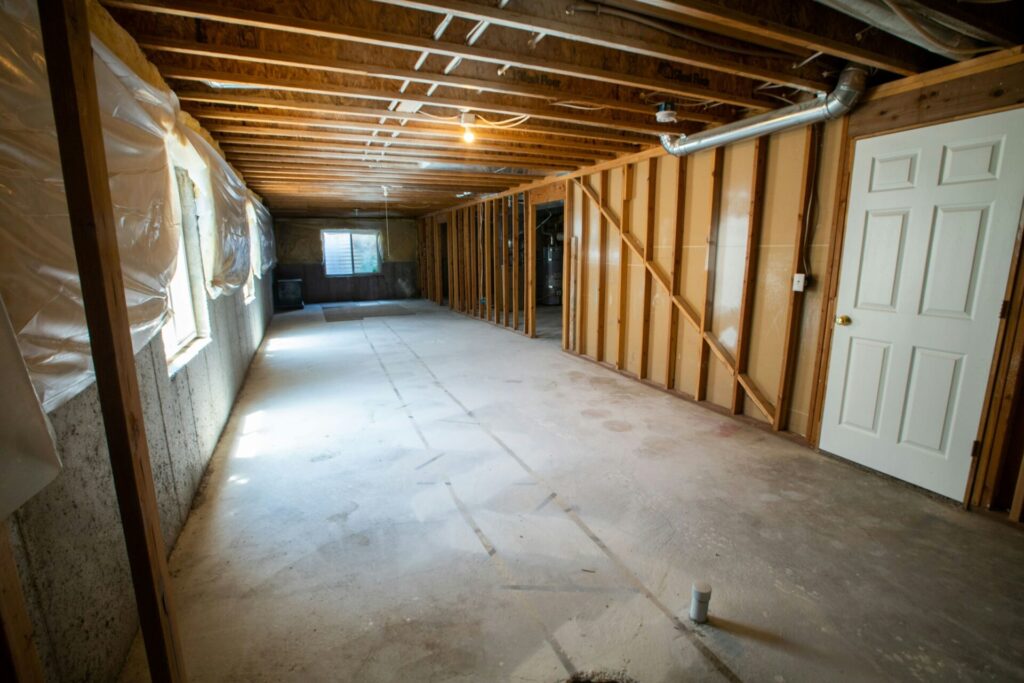
Basement finishing cost an average of $22,884 in Angi’s 2026 data, and most homeowners paid between $12,025 and $34,646. Zonda’s Cost vs. Value 2025 report priced a larger, fully equipped basement at $52,012 and estimated that 71% of the cost would be recouped at resale. The two numbers differ because Angi averages real jobs of every size, while Zonda’s Cost vs. Value 2025 report prices one fixed project with a wet bar and a full bathroom.
By those estimates, a finished basement recovers part of its cost when you sell. In the meantime, it gives you living space you can use every day. This guide covers what drives the price, what the value studies show, what to check before work starts and how to pay for the project.
How much does basement finishing cost?
Angi’s 2026 national average of $22,884 is based on 7,253 projects completed by Angi Pros. Typical jobs ran $30 to $75 per square foot, while high-end finishes can pass $120 per square foot (Angi, 2026). Size sets the starting range, as Angi’s table shows.
| Size | Typical area | Angi’s range (2026) |
|---|---|---|
| Small | 300 to 700 sq ft | $6,500 to $16,200 |
| Medium | 700 to 1,500 sq ft | $17,000 to $24,000 |
| Large | 1,500 to 2,000 sq ft | $21,000 to $34,000 |
| Oversized | 2,000 to 4,000 sq ft | $30,000 to $75,000 |
However, Angi says the features you choose have the greatest influence on the total. Here are Angi’s 2026 ranges for common basement features.
| Feature | Angi’s range (2026) |
|---|---|
| Bedroom | $3,000 to $10,000 |
| Bathroom | $6,600 to $16,500 |
| Bar | $800 to $22,500 |
| Home gym | $300 to $15,000 |
| Home theater | $10,000 to $60,000 |
| Game room | $3,000 to $18,000 |
For example, a bedroom plus a bathroom adds about $9,600 to the bill, based on the low end of Angi’s ranges. Because the ranges are so wide, treat them as a starting point and plan around your own written bids. If your project reaches beyond the basement, see how much it costs to renovate a house for whole-house figures.
What pushes the cost of finishing a basement up
Angi’s 2026 page also breaks the job into parts. Framing runs $4 to $10 per square foot, insulation $1.50 to $2.50, drywall $1.50 to $3 and flooring $3 to $10. Those line items are fairly predictable. However, the costs that surprise homeowners usually sit behind the walls and under the floor.
Water and foundation repairs
Waterproofing costs $5 to $10 per square foot, according to Angi’s 2026 data. Foundation repair runs about $500 for minor cracks and $2,000 to $7,100 for larger work. Fix either one before framing, because finished walls hide a problem without fixing it.
An egress window
Model building codes typically require an emergency escape opening in a basement bedroom, which usually means an egress window. Angi puts the cost at $2,700 to $5,900 in 2026. Your local code decides, so see the code rules in the checklist section below.
Permits and inspections
Permits for a basement remodel usually cost $500 to $2,000, depending on your city or county (Angi, 2026). A contractor often handles the permit application, but check that your contract says so.
A general contractor’s fee
A general contractor coordinates the electricians, plumbers and other trades so you have one point of contact. Angi reports that general contractors charge 10% to 25% of the project cost. On a project the size of Angi’s $22,884 average, 10% is about $2,290 and 25% is about $5,720.
Asbestos in an older home
Homes built before the 1980s can contain asbestos, particularly in older vinyl flooring. Angi puts the average removal cost at $2,100 in 2026. Angi also says there is no safe do-it-yourself test, so if you suspect asbestos, hire a removal company before demolition starts.
A cushion for surprises
Angi suggests adding 20% to the top of your estimate to cover problems found once work begins. Say your highest bid is $30,000. With a 20% cushion, you would budget $36,000.
Once you know your budget with that cushion, check what a home equity loan or refinance would cost before you sign a contract.
Does finishing a basement add value?
Zonda’s Cost vs. Value 2025 report (published on JLC Online) estimated that a $52,012 basement remodel would add $36,905 in resale value. That means Realtors’ estimates put the recouped share at 71%. The model project finishes a lower level into a 20-by-30-foot entertaining area with a wet bar and a 5-by-8-foot full bathroom. It also encloses the mechanical area with 24 linear feet of finished partition.
The 2025 Remodeling Impact Report from the National Association of Realtors (NAR) and the National Association of the Remodeling Industry (NARI), published in April 2025, also estimated that a basement conversion to living area recovers 71% of its cost. That report is an opinion survey. Realtors estimated the value each project adds, and NAR set that estimate against the cost NARI members reported. Thus it does not measure actual sale prices.
The two 71% figures come from separate studies. Both rest on Realtors’ estimates of resale value, but they take their cost figures from different sources, so the match is a coincidence. In the same report, homeowners surveyed by NAR’s HouseLogic site gave a basement conversion a Joy Score of 8.8 out of a possible 10.
How a basement compares with other projects
In the Cost vs. Value 2025 estimates, a basement remodel recouped less than smaller kitchen and bath projects, but more than a major kitchen remodel.
| Project (Cost vs. Value 2025) | Cost recouped |
|---|---|
| Minor kitchen remodel, midrange | 113% |
| Bath remodel, midrange | 80% |
| Basement remodel | 71% |
| Major kitchen remodel, midrange | 51% |
What the percentages cannot tell you
These are national figures, so they do not predict what your house will sell for. Local prices, the quality of the work and what nearby homes offer all play a part. Neither study estimates that basement finishing recovers its full cost. As a result, the stronger case for the project is the use you get from the space while you live there.
Before you finish a basement: what to check first
Water, code rules and the right crew all shape the budget and the schedule. Check each of these before you ask for bids.
Fix water problems before basement finishing starts
The EPA’s guide to mold and moisture says to dry water-damaged areas within 24 to 48 hours to prevent mold growth. It also says a moisture problem must be completely fixed before cleanup is finished. The EPA recommends keeping indoor humidity below 60%, ideally between 30% and 50%. So note any damp spots, leaks and cracks, and show them to each contractor. If you have a sump pump, make sure it works before the walls go up.
Plan for egress and permits
The 2021 International Residential Code, section R310.1, asks for an emergency escape and rescue opening in a basement and in every sleeping room, with some exceptions. Section R310.2.1 then sets the net clear opening at 5.7 square feet, or 5 square feet for a grade-floor opening. However, your city or county adopts its own edition, so ask the building department what applies to your home. Finishing work also normally needs a permit.
Expect basement finishing to take a few months
Construction takes four to eight weeks on average, according to Angi. With planning and permits, the whole project runs three to four months. Angi adds that waterproofing or structural repairs can stretch a project to six to twelve months.
Basement finishing checklist: dos and don’ts
Use this list as you plan and collect bids.
- Write a wish list of the rooms and uses your household wants before you call contractors.
- Get at least three written bids for the same scope of work, so you can compare them line by line.
- Fix leaks and dampness before any framing starts.
- Test the sump pump, or ask a contractor whether you need one.
- Consider a bedroom and a bathroom if your household will use them, and budget for the egress window a bedroom typically needs.
- Add plenty of lighting, because most basements get little daylight.
- Think about a drywall ceiling instead of a drop ceiling, and ask each bidder to price both.
- Don’t skip the permit, since inspections check the work before the walls close.
- Don’t take on everything yourself: framing, electrical and plumbing are the places where a mistake costs the most, so hire licensed, insured pros for electrical and plumbing.
How to pay for basement finishing
Savings are the simplest way to pay, because you take on no new debt and put no new lien on your home. If you need to borrow, these are the main options.
Home equity loan or HELOC
A home equity loan pays a lump sum, while a home equity line of credit (HELOC) lets you draw money as the work progresses. Both borrow against your equity, which is your home’s value minus what you owe. The CFPB warns that your home is the collateral for either one, so you could lose it if you fall behind. See HELOC vs. home equity loan to compare the two.
Cash-out refinance
A cash-out refinance replaces your mortgage with a larger one and pays you the difference in cash. Freddie Mac’s weekly survey put the average 30-year fixed rate at 7.11% on November 12, 2026, up from 6.24% a year earlier. A cash-out loan can be priced higher. Your rate on a cash-out refinance replaces the rate on your existing mortgage.
Renovation mortgages for buyers
If you are buying a home with an unfinished basement, a renovation mortgage can fold the project into one loan. The FHA 203(k) Standard lists finished attics and basements as eligible improvements (HUD Handbook 4000.1, II.A.8.a.vi(A)(1)). The Limited 203(k) covers only minor, nonstructural work, with rehabilitation costs capped at $75,000. So ask your lender whether it fits a full basement finish.
Fannie Mae HomeStyle and Freddie Mac CHOICERenovation also let a lender finance renovation costs, within a 75% limit (Fannie Mae Selling Guide B5-3.2-02; Freddie Mac Guide 4607.7). On a purchase, the limit is 75% of the lesser of the purchase price plus renovation costs or the as-completed appraised value. On a refinance, it is 75% of the as-completed value. These loans work with a purchase or with a limited cash-out or no cash-out refinance. For more detail, see fixer-upper loans, and compare every option in the home improvement loans guide.
Before you choose, compare offers from more than one lender for the loan type that fits your project.
Basement finishing FAQ
How much does it cost to finish a basement?
Angi’s 2026 data puts the national average at $22,884, with most projects between $12,025 and $34,646. Zonda’s Cost vs. Value 2025 report priced a fully equipped model project at $52,012. Your own bids are the number to plan around.
Should I finish my basement before selling?
Both national studies estimate that a basement project recovers about 71% of its cost, not all of it. So on those estimates, finishing a basement only to sell would add less in resale value than it costs. A local agent can tell you how finished basements affect prices where you live.
How long does basement finishing take?
Angi says construction takes four to eight weeks on average. With planning and permits, expect three to four months. Water or structural repairs can add more time.
Do I need a permit for basement finishing?
Finishing work normally needs a permit, and Angi puts basement remodel permits at $500 to $2,000 in 2026. Because rules vary by city and county, check with your building department before work starts.
Can I finance basement finishing?
Yes. Common options include a home equity loan, a HELOC and a cash-out refinance, while a buyer can use a renovation mortgage such as an FHA 203(k). Each one borrows against your home, so compare the payment and the risk before you sign.