On this page
- Loans for distressed property depend on the home’s condition
- When a standard loan works on a distressed property
- Rehab loans if you will live in the home
- Loans for distressed property you will flip or rent
- How to get a loan to flip a house
- Cash needed to buy a distressed property
- How to make a fast offer on a distressed property
- Risks of buying a distressed property
- FAQ
- Your next step
Yes, there are loans for distressed property. A foreclosure or short sale that is livable can close with a standard FHA, VA, USDA or conventional loan. However, a home that fails the lender’s property standards needs a renovation loan if you will live in it, such as an FHA 203(k), Fannie Mae HomeStyle, Freddie Mac CHOICERenovation, or a VA or USDA loan with repairs. If you will flip or rent it, you will likely use cash, a hard money loan or another short-term loan.
Below are the current rules for each loan, how a loan to flip a house works, and the cash each path takes.
Loans for distressed property depend on the home’s condition
“Distressed” can describe the sale, the house, or both. These are the common types:
- Pre-foreclosure: the owner is behind on payments, but the lender has not taken the home yet. See how to buy a pre-foreclosed property.
- Short sale: the seller’s lender must approve a price below the loan balance.
- Foreclosure auction: a trustee or sheriff’s sale, usually for cash.
- REO (real estate owned): a bank-owned home the lender took back and now lists.
- Government-owned homes: HUD and VA sell homes they acquired. See how to buy a HUD home.
- As-is sales: any seller who will not make repairs.
Two kinds of distress matter. First, the seller’s situation changes the timeline and the contract. For example, a short sale can take months, and a bank’s addendum often limits your rights. Still, the type of sale does not change which loan you can use.
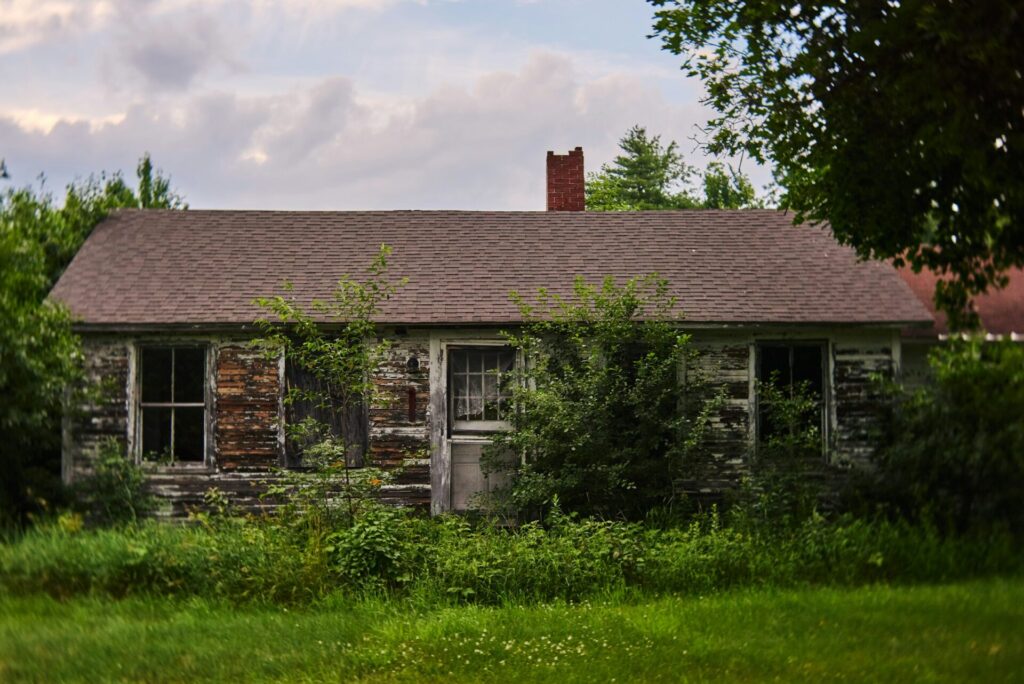
Second, the home’s condition decides the loan. A clean, bank-owned house can close with the same mortgage as any other home. In contrast, a house with no heat and a failing roof cannot, no matter who sells it.
When a standard loan works on a distressed property
Many loans for distressed property are ordinary mortgages. What matters is whether the home passes the appraisal.
HUD Handbook 4000.1 requires FHA-insured homes to be “safe, sound, and secure.” When an FHA appraiser finds a problem, the appraiser must list the repairs and the cost to cure. Likewise, Fannie Mae and VA appraisers appraise a home “subject to” needed repairs.
These items most often stop a standard loan:
- Utilities that are off, so the appraiser cannot test the heat, plumbing or electrical systems
- A leaking or worn-out roof
- Foundation or other structural damage
- Safety hazards, such as exposed wiring or peeling paint in an older home
- A missing or gutted kitchen or bathroom
- Water damage, mold or wood-boring insects
A “subject to” appraisal means the repairs must happen before closing. Banks that sell REO homes rarely agree to that. As a result, these homes usually need a loan that pays for the repairs. For FHA’s rules, read what happens when a home does not meet FHA minimum property standards.
Rehab loans if you will live in the home
For owner-occupants, the most common loans for distressed property are rehab loans. A rehab loan, also called a renovation loan, combines the price and the repair cost in one mortgage. The lender then pays the contractor in stages as the work is done.
| Loan | Who can use it | Minimum down payment | Repair limits | Notes |
|---|---|---|---|---|
| FHA Limited 203(k) | Owner-occupants | 3.5% with a 580+ credit score | Up to $75,000; no structural work | No consultant required |
| FHA Standard 203(k) | Owner-occupants | 3.5% with a 580+ credit score | $5,000 minimum; structural work allowed | HUD-approved 203(k) consultant required |
| Fannie Mae HomeStyle Renovation | Principal residence, 1-unit second home, 1-unit investment property | 3% (1-unit principal residence, first-time buyer); 15% for an investment property | 75% of the lesser of price plus repairs, or the as-completed value | One loan for purchase and repairs |
| Freddie Mac CHOICERenovation | 1–4 unit primary residence, second home, 1-unit investment property | 3% with Home Possible or HomeOne | 75% of the lesser of price plus repairs, or the as-completed value | Work due within 450 days of closing |
| VA purchase with repairs | Eligible veterans and service members | 0% with full entitlement, if the lender offers it | Repairs must bring the home up to VA standards | Lender rules vary |
| USDA with repairs | Eligible rural buyers | 0% | Nonstructural up to $75,000; structural allowed | Habitable within 30 days for the nonstructural option |
FHA 203(k)
The Limited 203(k) covers up to $75,000 in nonstructural repairs, under HUD Handbook 4000.1 and Mortgagee Letter 2024-13. The Standard 203(k) handles bigger jobs, including structural work. Our FHA 203(k) loan guide covers the details.
Fannie Mae HomeStyle and Freddie Mac CHOICERenovation
These conventional rehab loans allow larger budgets and also cover a second home or a 1-unit investment property. Under Fannie Mae’s Selling Guide, repairs cannot exceed 75% of the lesser of the price plus repairs or the as-completed value. Freddie Mac uses the same 75% cap. Freddie Mac’s CHOICERenovation works with its 3% down Home Possible and HomeOne loans.
VA and USDA
VA lists “simultaneously purchase and improve a home” as an allowed loan purpose. Lenders may hold repair funds in escrow after closing, although the work must be finished before VA guarantees the loan. Because lender rules vary, ask whether your lender offers a VA renovation loan. Similarly, USDA’s handbook (HB-1-3555, section 12.28) lets buyers finance repairs with the purchase, up to the as-improved value.
Compare these side by side in buying a fixer-upper: what kinds of loans are available, or see the home improvement loans guide for projects after you move in.
Loans for distressed property you will flip or rent
FHA, VA and USDA loans require you to live in the home. Therefore, an investor uses one of these instead.
Conventional investment loan. Fannie Mae’s Eligibility Matrix and Freddie Mac’s Guide set a minimum of 15% down for a 1-unit investment purchase and 25% for 2–4 units. Many lenders require more, and the home must still pass the appraisal. See our investment property loans guide.
Hard money and fix-and-flip loans. A hard money loan is a short-term loan from a private lender, based mostly on the property and your plan. Published terms in 2026 include:
- Rates: Kiavi advertises rates “as low as 8.25%” (October 2026). LendingOne put fix-and-flip rates at roughly 9% to 13% in August 2026. By comparison, Freddie Mac’s 30-year fixed average was 7.18% on November 5, 2026.
- Points: LendingOne says origination fees typically run 1% to 3% of the loan.
- Leverage: LendingOne advertises up to 92.5% of total cost and 100% of rehab costs. Kiavi advertises up to 100% of the price and 80% of the after-repair value.
- Term: 12 to 24 months at both lenders.
These are advertised maximums. Terms vary by lender and deal, and first-time flippers often get less.
Bridge loan. Short-term money until you sell or refinance. See what a bridge loan is.
DSCR loan. After the repairs, a rental investor can refinance into a long-term loan based on rent instead of personal income. See our DSCR loan guide.
HELOC or home equity loan. Equity in a home you own can fund the purchase or the repairs. Compare them in HELOC vs. home equity loan.
Cash. Cash closes fastest, and auctions often require it.
How to get a loan to flip a house
A fix-and-flip loan works in three stages:
- Purchase. At closing, the lender funds part of the price, and you bring the rest plus closing costs.
- Rehab draws. The lender holds the repair budget. Then, as each stage is done, an inspector checks the work and the lender releases that draw.
- Exit. Finally, you sell the home and repay the loan, or refinance into a rental loan.
Lenders size these loans for distressed property on two numbers. Loan-to-cost (LTC) is the loan divided by the price plus repairs. After-repair value (ARV) is the appraiser’s estimate of the value once the work is done. Usually, the lower of the two limits sets the loan.
Your exit also depends on your buyer’s loan. Under HUD Handbook 4000.1, a home resold 90 days or fewer after the seller bought it cannot get an FHA loan. From 91 to 180 days, the lender needs a second appraisal if the price is 100% or more above what the seller paid. Exceptions include HUD REO sales, sales by banks and government agencies, and inherited homes. HUD counts to the date when all parties sign the sales contract. So an FHA buyer cannot sign a contract on your flip until 91 days after you bought it.
If you are buying a flip instead, see questions to ask before buying a flipped house.
Cash needed to buy a distressed property
Say a buyer finds a distressed home for $200,000 that needs $40,000 in repairs. This example leaves out closing costs, lender fees, any contingency reserve, FHA upfront mortgage insurance and interest.
| Plan | Loan | Down payment | Repairs paid from | Cash needed (about) |
|---|---|---|---|---|
| Live in it, FHA Limited 203(k) | 96.5% of $240,000 (price plus repairs) = $231,600 | $8,400 (3.5%) | The loan | $8,400 |
| Rent or flip it, conventional investment loan | 85% of $200,000 = $170,000 | $30,000 (15%) | Your cash | $70,000 |
The 203(k) amount also depends on the appraisal. HUD caps it at 110% of the after-improved value, so this example needs a value of about $218,182 or more after repairs. In addition, the FHA path assumes a credit score of 580 or higher.
On the other hand, a hard money lender may lend part or all of the repair cost. The cash for a flip then depends on the lender’s LTC and ARV limits, and a newer investor should expect less leverage. Before you offer, get a contractor’s estimate and read how much it costs to renovate a house.
How to make a fast offer on a distressed property
Sellers favor offers that will close. Even so, you can make a strong one and keep your protections:
- Get preapproved for the loan you will use, such as a 203(k).
- Line up a renovation lender early, since not every lender offers these loans.
- Get a contractor bid before closing. A 203(k) lender needs it, and a Standard 203(k) also needs a consultant’s work write-up.
- Show proof of funds for the down payment and any repairs you will pay yourself.
- Use a short inspection period of a few days instead of none.
A lender’s commitment letter says the lender will fund your loan if conditions are met. It depends on the appraisal, final underwriting, title and the letter’s terms. In other words, it is conditional, so read those conditions.
An as-is sale means the seller will not pay for repairs. You still need an inspection to learn what those repairs are and what they cost. Distressed homes often sit vacant, so frozen pipes, mold and roof leaks are common. Read why a home inspection matters.
Risks of buying a distressed property
Repairs over budget. Hidden damage is common, so a Standard 203(k) requires a contingency reserve of at least 10% of repair costs on homes 30 years or older, or 15% when the utilities do not work.
Title problems and liens. Foreclosures and tax sales can carry unpaid taxes, liens or ownership disputes. Get a full title search and an owner’s title insurance policy.
Occupied homes. A former owner or tenant may still live there, and you often cannot see inside first.
Auction terms. Many auctions require cash, sell as-is with no inspection, and allow no contingencies. Because rules vary by state and county, read the terms of sale before you bid.
Closing time. A renovation loan needs a contractor bid, a “subject to” appraisal and lender review of the repair plan. As a result, it takes longer than a cash or hard money closing.
FAQ
Is there a loan for distressed properties?
Yes. A livable distressed home can close with a standard loan. Otherwise, owner-occupants use a rehab loan, and investors use cash or a short-term loan.
Can I use an FHA loan on a foreclosure?
Yes, if the home meets FHA’s property standards at appraisal. If it needs repairs, an FHA 203(k) can finance the purchase and the work.
Can I buy a distressed home with no money down?
Possibly, with a VA or USDA loan. The home must meet the program’s standards or be repaired under its rules, and you must live in it. USDA also has location and income limits.
How do you get a loan to flip a house?
Most flippers use a hard money or fix-and-flip loan that funds part of the price and pays for the rehab in draws. You repay it when you sell or refinance.
Do you need an inspection on an as-is home?
Yes, you should get one. As-is means the seller will not make repairs, so the inspection shows what you are taking on.
Will a bank finance a house that needs repairs?
Yes, through a renovation loan such as a 203(k), HomeStyle or CHOICERenovation. However, a bank rarely funds a standard loan on a home that fails the appraisal unless the repairs are made first.
Your next step
First, decide whether you will live in the home or flip it. That choice narrows loans for distressed property to two or three options. Then get a repair estimate and talk to a lender who offers renovation or investor loans before you make an offer. You can also compare current mortgage rates as you plan.